
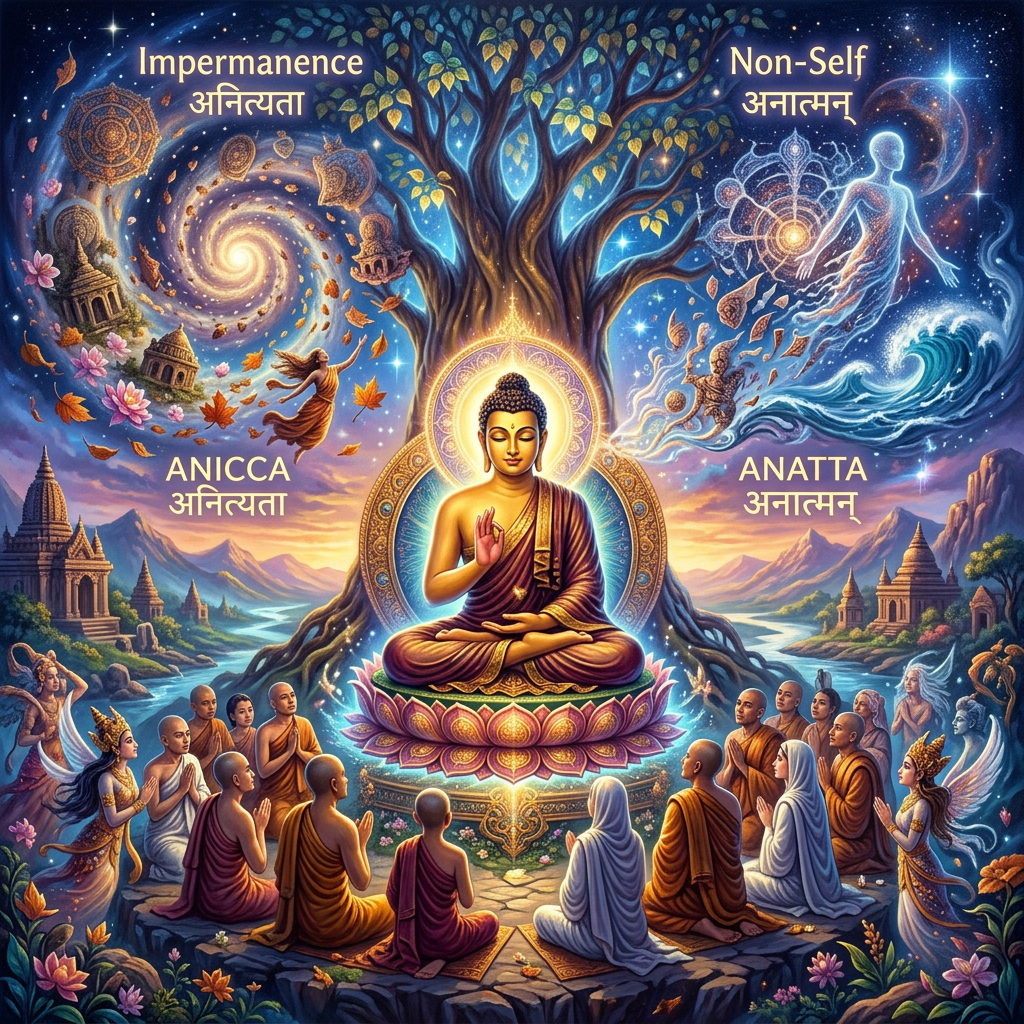
ព្រះសាស្ដាបានសម្ដែងថាធម៌ទាំងឡាយជាអនត្តា (មិនមានអ្នកបង្គាប់បញ្ជាប្រព្រឹត្តទៅតាមច្បាប់ធម្មជាតិនោះៗ) ។ធម៌ទាំងឡាយមានហេតុនិងបច្ច័យ។
សាកល្បងទ្រឹស្ដីព្រះអង្គបើមិត្តអ្នកអានទាំងអស់អាចរកឃើញមានអ្នកបញ្ជាជួយឲ្យយោបល់ខ្ញុំផង។
អ្វីដែលយើងដឹងខាងក្រៅខ្លួនយើង បើមិនមាន ភ្នែក ត្រចៀក ច្រមុះ អណ្ដាត កាយ (ដោយមានទ្វារទាំង ៥ នេះ។ទើបមានចិត្ត)តើអាចយល់ស្របទេ? ខ្ញុំបាទសម្ដែងរូបមន្ដតាមសមត្ថភាពដែលដឹងច្បាស់តាមព្រះសាស្ដា
ខ្ញុំបាទនិងអត្ថាធិប្បាយតាមទ្វារតែមួយគឺទ្វារភ្នែក។បើឃើញថាមិនមានអ្នកបញ្ជាបានសេចក្តីថាទ្វារបួនទៀតដែលជា ត្រចៀក ច្រមុះ អណ្ដាត កាយមិនខុសគ្នាទេ។ដើម្បីឲ្យឃើញវត្ថុនោះត្រូវតែមានបច្ច័យទាំងក្នុងនិងខាងក្រៅ។ខាងក្នុងដោយសង្ខេបត្រូវមានកែវភ្នែកល្អខាងក្រៅត្រូវមានរូប(វត្ថុ)និងពន្លឺជាចាំបាច់ហើយក៏មានវត្ថុផ្សេងៗទៀត។ផ្អាកបន្តិចសិន។វត្ថុទាំងអស់នៅក្នុងធម្មជាតិត្រូវតែគោរពតាមច្បាប់ធម្មជាតិ ដ ត្រឹមត្រូវ។ដូចជាផែនដីដែលវិលជុំវិញព្រះអាទិត្យបើគ្មានច្បាប់ធម្មជាតិដែលជាទំនាញចូលខាងក្នុងប្រាកដជាវិលទៅបុកព្រះអាទិត្យ។ឆ្ងល់ទៀតកម្លាំងទាញទៅក្នុងទៅជាវិលជុំវិញព្រះអាទិត្យ។ចំពោះអ្នកសិក្សាថ្នាក់ទី ១២ គាត់មិនឆ្ងល់ទេព្រោះជាផ្នែករបស់រូបវិទ្យា ។យើងទះដៃផ្ទប់គ្នាស្រាប់តែមានសំឡេង។អាចជាសំឡេងអំពីធម្មជាតិ ក៏មាន ដើមឈឺកកិតគ្នា ជិតភ្លៀងមានផ្គរ ។ចំណែកឯឮមកពីការទះដៃផ្ទប់គ្នានោះគឺមានអ្នកទះដៃគឺមនុស្សមែនឬទេ? ឥឡូវងាកទៅមើលហេតុអ្វីក៏ភ្នែកអាចឃើញរូបមានអ្នកបញ្ជាឬទេ?ខ្ញុំបាទមិនប្រើពាក្យបាលីដែលពិបាកយល់។ ហេតុអ្វីបានអាចមើលឃើញ ទាល់តែមានវិញ្ញាណទើបអាចមើលឃើញ។ នៅពេលដែលរូប(វត្ថុ)ខាងក្រៅប៉ះផ្ទប់នឹងបសាទរូបដែលជារូបមួយក្នុងចំណោមរូបទាំង ១០របស់ភ្នែកជាហេតុនិងបច្ច័យមានវិញ្ញាណហៅថាចក្ខុវិញ្ញាណ ឃើញរូបដែលប៉ះផ្ទុបហើយបានថតរូបនោះបញ្ជូនទៅចិត្តឲ្យដឹងល្អឬអាក្រក់ដែលមានកម្មល្អឬអាក្រក់ជាហេតុនិងបច្ច័យដែលបានធ្វើហើយ។ចំណែកឯទ្វារទាំងបួនទៀតមានដំណើរការគោរពច្បាប់ធម្មជាតិដូចគ្នា។ក្នុងការដែលរៀបរាប់មកនេះតើមានឃើញបុគ្គលណាជាអ្នកបញ្ជា។បើមានតើនៅកន្លែងណា?តើអាចយល់ព្រមទេមិនមានអ្នកបញ្ជា?បើសិនជាយល់ព្រមមានតែហេតុនិងបច្ច័យដែលធ្វើឲ្យមានវិញ្ញាណ។ដូចជាពីមុននេះខ្ញុំបានធ្វើឧទាហរណ៍ទះដៃស្រាប់តែឮសំឡេងក៏យល់ថាមានអ្នកទះដៃ ។គួរឱ្យឆ្ងល់ដែរវិញ្ញាណដែលបដិសន្ធិដំបូងមិនមានអ្នកបញ្ជា មកដល់ការទះដៃស្រាប់តែមានអ្នកទះដៃ។តែបើយល់ដូចខ្ញុំបាទដែរសុំបណ្ឌិតអ្នកប្រាជ្ញទាំងឡាយបង្ហាញផង។ ថ្វាយបង្គំលានិងជម្រាបលា

English Translation (អត្ថបទភាសាអង់គ្លេស)The Absolute Reality of Anattā: The Sovereignless Law of NatureThe Supreme Teacher expounded that all phenomena are Anattā (Non-Self)—meaning there is no supreme commander or cosmic controller; everything functions purely according to its respective Natural Laws. All phenomena arise strictly from causes and conditions.Let us put the Buddha’s theory to the test. If any reader can truly find or prove the existence of a « commander » or « controller » behind these processes, please kindly share your insights and advise me.Consider this: Is it agreeable that everything we perceive outside of ourselves could not be known without the Eyes, Ears, Nose, Tongue, and Body? It is only through these 5 physical doors that consciousness arises. I am expounding this formula to the best of my realization, strictly aligned with the teachings of the Supreme Teacher.To demonstrate this, I will analyze just one sensory doorway: the Eye-door. If we can clearly perceive that there is no commander behind the act of seeing, it follows that the other four doors—the Ears, Nose, Tongue, and Body—operate in the exact same manner. For the phenomenon of seeing to occur, specific internal and external conditions must be met. In brief, internally, one must possess a healthy eye-organ (Pasāda-rūpa). Externally, the presence of a physical object (Rūpa) and light (Āloka) is absolute, along with other supporting factors.Let us pause for a moment to look at nature. Every object in the universe strictly obeys flawless Natural Laws. Take the Earth revolving around the Sun: if there were no natural law of inward gravitational pull, the Earth would spin directly into the Sun. Yet, curiously, this inward pulling force causes it to perfectly orbit the Sun instead. For a Grade 12 student, this is not a mystery at all, as it is a fundamental law of physics.Now, consider when we clap our hands together, a sound is suddenly produced. Sound can occur naturally—such as trees frictionally rubbing against each other, or thunder before a rainstorm. However, when we hear a sound generated from clapping, we naturally assume, « Ah, there is a clapper, a human being doing it, » do we not?Now let us turn back and look closely: Why can the eye see an object? Is there a commander directing it? I will purposely avoid heavy scriptural terms that are difficult to grasp. For seeing to happen, consciousness must arise. When an external visual object impinges upon the eye-sensitive matter (Cakkhu-pasāda—which is one of the ten structural material attributes within the eye), it serves as the precise cause and condition for the eye-consciousness (Cakkhu-viññāṇa) to arise. This consciousness perceives the impinged image, captures it, and transmits it to the mind to experience it as either agreeable or disagreeable. This experience is governed strictly by the causes and conditions of past wholesome or unwholesome deeds (Kamma) that have already been committed.The other four sensory doors operate under the exact same natural laws. Throughout this entire described process, where is the individual acting as the commander? If such a commander exists, where exactly is he located? Can we now agree that there is absolutely no commander?If you agree, then we see only causes and conditions generating consciousness. Going back to my earlier analogy of clapping: when a sound occurred, we falsely perceived that « there is a human clapper. » It is quite ironical to ponder: the initial rebirth-linking consciousness (Paṭisandhi-citta) at the dawn of life arises purely through causes and conditions without any commander, yet when it comes down to a simple clap of hands, we suddenly invent a « human controller » behind it.If any scholars or wise sages perceive this truth differently, I warmly welcome you to show me the way.I pay my highest homage, and goodbye for now.
Traduction Française (អត្ថបទភាសាបារាំង)La Réalité Absolue d’Anattā : La Loi de la Nature sans CommandantLe Suprême Maître a exposé que tous les phénomènes sont Anattā (Non-Soi) — ce qui signifie qu’il n’existe aucun commandant suprême ni contrôleur cosmique ; tout fonctionne purement selon ses Lois Naturelles respectives. Tous les phénomènes découlent strictement de causes et de conditions.Mettons la théorie du Bouddha à l’épreuve. Si un lecteur peut véritablement trouver ou prouver l’existence d’un « commandant » ou d’un « contrôleur » derrière ces processus, je l’invite gentiment à partager ses réflexions et à m’éclairer.Considérez ceci : Êtes-vous d’accord pour dire que tout ce que nous percevons à l’extérieur de nous-mêmes ne pourrait être connu sans les Yeux, les Oreilles, le Nez, la Langue et le Corps ? C’est uniquement à travers ces 5 portes physiques que la conscience émerge. J’expose cette formule au mieux de ma compréhension, en stricte conformité avec les enseignements du Suprême Maître.Pour le démontrer, j’analyserai une seule porte sensorielle : la porte de l’Œil. Si nous pouvons clairement percevoir qu’il n’y a aucun commandant derrière l’acte de voir, il s’ensuit que les quatre autres portes — les Oreilles, le Nez, la Langue et le Corps — fonctionnent exactement de la même manière. Pour que le phénomène de la vision se produise, des conditions internes et externes spécifiques doivent être réunies. En bref, sur le plan interne, il faut posséder un organe visuel sain (Pasāda-rūpa). Sur le plan externe, la présence d’un objet physique (Rūpa) et de la lumière (Āloka) est absolue, ainsi que d’autres facteurs de soutien.Arrêtons-nous un instant pour observer la nature. Chaque objet dans l’univers obéit strictement à des Lois Naturelles parfaites. Prenez la Terre qui tourne autour du Soleil : s’il n’y avait pas de loi naturelle de force gravitationnelle interne, la Terre s’écraserait directement sur le Soleil. Pourtant, curieusement, cette force d’attraction interne la fait orbiter parfaitement autour du Soleil. Pour un élève de terminale (classe de 12e), ce n’est pas du tout un mystère, car c’est une loi fondamentale de la physique.Considérez maintenant que lorsque nous claquons des mains, un son est soudainement produit. Le son peut se produire naturellement — comme des arbres qui se frottent les uns contre les autres, ou le tonnerre avant la pluie. Cependant, lorsque nous entendons un son généré par un claquement de mains, nous supposons naturellement : « Ah, il y a quelqu’un qui claque des mains, un être humain qui le fait », n’est-ce pas ?Revenons maintenant en arrière et observons attentivement : Pourquoi l’œil peut-il voir un objet ? Y a-t-il un commandant qui le dirige ? J’éviterai volontairement les termes scripturaires lourds et difficiles à saisir. Pour que la vision se produise, la conscience doit surgir. Lorsque l’objet visuel externe entre en contact avec la matière sensible de l’œil (Cakkhu-pasāda — qui est l’un des dix attributs matériels structurels de l’œil), cela sert de cause et de condition précises pour que la conscience visuelle (Cakkhu-viññāṇa) apparaisse. Cette conscience perçoit l’image entrée en contact, la capture et la transmet à l’esprit pour qu’il en fasse l’expérience comme agréable ou désagréable. Cette expérience est régie strictement par les causes et les conditions des actions passées, salutaires ou insalubres (Kamma), qui ont déjà été commises.Les quatre autres portes sensorielles fonctionnent selon les mêmes lois naturelles. Tout au long de ce processus décrit, où se trouve l’individu qui agit en tant que commandant ? Si un tel commandant existe, où se trouve-t-il exactement ? Pouvons-nous maintenant convenir qu’il n’y a absolument aucun commandant ?Si vous êtes d’accord, alors nous ne voyons que des causes et des conditions générant la conscience. Pour en revenir à mon analogie précédente du claquement de mains : lorsqu’un son s’est produit, nous avons faussement perçu qu’« il y a un être humain qui claque des mains ». Il est assez ironique de méditer sur ceci : la conscience initiale de reconnexion à la renaissance (Paṭisandhi-citta) à l’aube de la vie surgit purement par des causes et des conditions sans aucun commandant, et pourtant, lorsqu’il s’agit d’un simple claquement de mains, nous inventons soudainement un « contrôleur humain » derrière lui.Si des savants ou des sages perçoivent cette vérité différemment, je les invite chaleureusement à me montrer la voie.Je rends mon plus haut hommage, et au revoir pour le moment.


